By Lola Cheung
Lola entered this essay into the Then and Now competition. It’s both the story of her family over three generations and an exploration of cultural identity. Many second and third generation migrants will find lots that resonates.
Lola’s story
I believe I’m a third-generation immigrant; my grandparents and my grandpa came over from China to the UK in search of a better life. My dad was born here, and when he married my mum, he brought her over. I’m always in awe when I think about my grandparents immigrating from their home country to somewhere so new and foreign. I always wonder how they felt back then, having to leave behind the sense of familiarity so that they could find better opportunities for life.
My grandpa first came to the UK in 1960 by himself and mainly worked in food services like Chinese restaurants; apparently, he even worked in London’s Chinatown. Then, 14 years later in 1974, my grandma arrived in the UK with one of my uncles, and within the next year my dad was born in Peterborough. They didn’t stay there long, as they decided to move to Wales and work in a Chinese takeaway in a small town. By the time my dad was born, all of his siblings were already adults getting ready to live their own lives, so in a way he was practically an only child. This would also mean that English would not have been easy for them as it was for my dad, and he would teach himself Chinese by listening to the adults around him. Back then, especially in the area he grew up in, my dad would have probably been the only Chinese person in his classes in school, so I wonder if my dad ever wished there was a familiar face he could confide in. Even now, in a more progressive and diverse society, sometimes I feel out of place whenever I enter a room and I’m the only Chinese person there. Sometimes my dad brings up this memory of a classmate being racist to him in school and how the teacher never really did much to stick up for him, which really bothered him. I think this affected him a lot, and he’s had other experiences like this when he was younger, but he always says these things toughen him up.
Often there are times where I question my identity. I always feel out of place, and I’ve never really felt it as much as I have in university. I’m not fully fluent in Cantonese, and I’m not aware of all the practices and traditions we hold, but even though I was born and raised in the UK, I feel so different from my white peers. I’m not Chinese enough for my own people, but I can never truly be British enough for the people around me. Back then, my dad must’ve felt like this when he was growing up; luckily, there have been a lot of kind people in his life who never treated him like an alien. Perhaps this is something we carry with us as a minority: in some ways there’s a pain of feeling out of place, but this allows us to indulge in cultures in different ways that help shape our own identity.
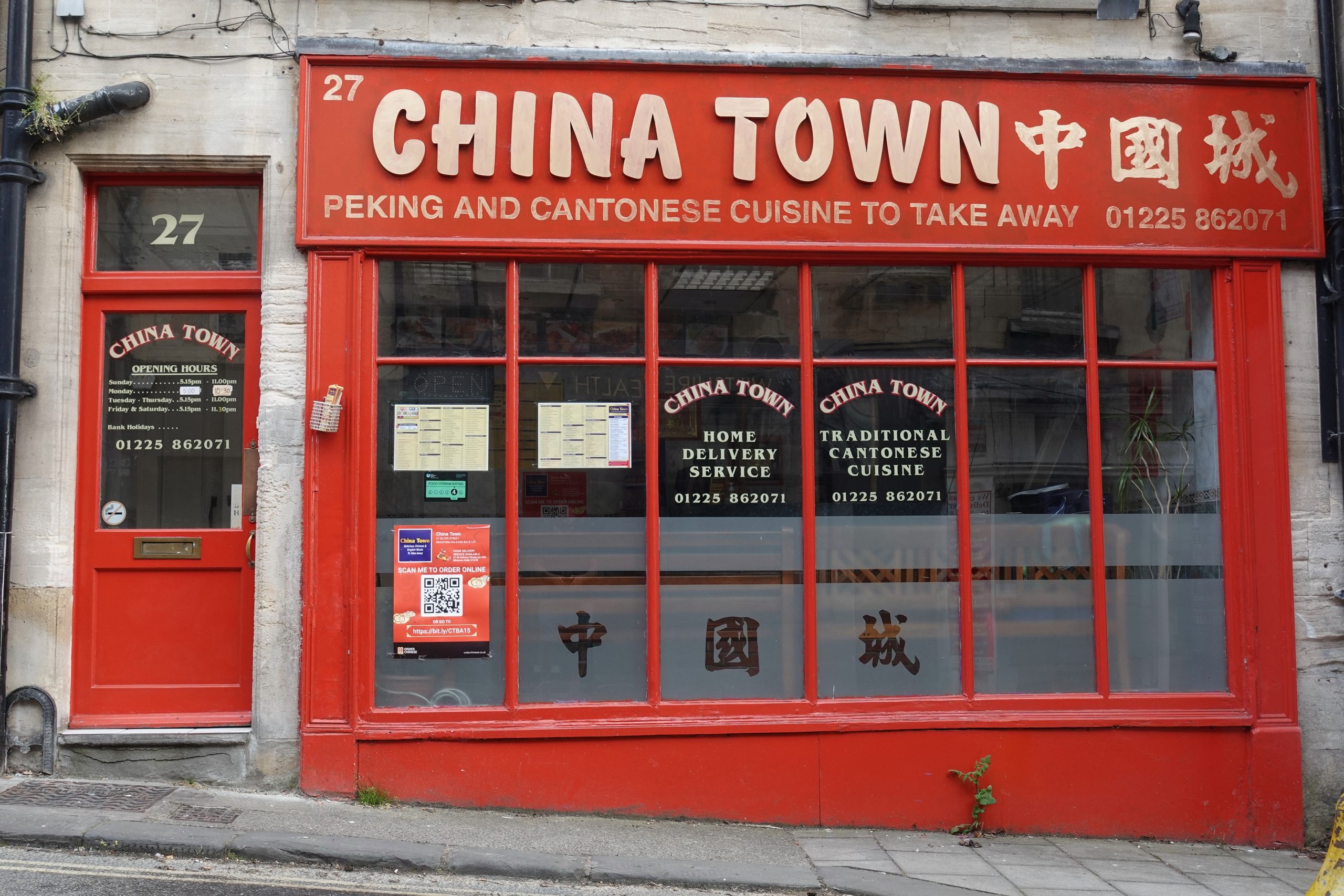
When my grandparents moved to that small town in Wales, they owned a Chinese takeaway that my family always drives past now; whenever we do, my dad always looks into it whenever he’s driving. After all, takeaways are a part of his childhood as they are mine. I think working in a takeaway builds a lot of resilience in my family, as they always say it’s tough work and that I have opportunities to find a better job. I’ve seen how tired it makes my parents whenever they come back from work, so I understand where they are coming from, but what else could my grandparents have done back in the day? All they could offer was food services as a way of life and to stay connected to their culture while finding work in a different country. Because of this, they have taught me the value of hard work at a very young age and that nothing comes easy; you must struggle in order to find success.
My mum was born in Hoiping in 1979, in a countryside village that mostly contained farmers. By the time she was ten or eleven, her dad came to the UK to find work for better opportunities. My mum says that she wouldn’t have seen her dad throughout her teenage years, and that they would mostly communicate through letters. The next time she saw him face to face was probably when she was 20, so now, with the development of technology, my mum calls her parents most nights. When I think about my mum being separated from her dad, it reminds me of how much I take technology for granted; if I ever felt homesick at university, my family was only a call away—they were so much more accessible to me now.
I often think about whether my mum misses her village and how she had to adjust to life in the UK. My mum says her favourite subject in school was English, so I suppose learning the language wasn’t too much of a burden for her. Language is such an important aspect of human interaction, as it allows us to communicate our thoughts and feelings in order to connect with others. So, how did my mum feel when those she could speak her dialect to decreased once she arrived here? My mum always tells us how great it is to understand Cantonese; it’s a language that holds nuances unique to its people, and it has so many expressions that just can’t be fully captured in English.
There are times where I think about whether my mum wishes that her children spoke her dialect or Cantonese more fluently—maybe she would feel more seen or happy that our cultural identity was stronger. Most of the time, if I need to tell my parents anything, I go to my dad first because we don’t have a language barrier. I do feel bad about this; I don’t like feeling like I literally can’t talk to my mum, but there are words she’ll use in Cantonese I don’t know, or there’ll be words I use in English that she doesn’t understand. Sometimes my mum makes fun of how I don’t really understand Cantonese, but recently I’ve decided to teach myself. I’ve been teaching myself how to write and read characters. I do this for myself because I want to strengthen my identity and help understand parts of myself.
My parents teach us different parts of our cultures; my mum teaches us the more traditional side of things, while my dad teaches us more about pop culture. My mum would teach us about our traditional holidays, like the Autumn Festival, and our practices, like how we pray to those who have left us and how we pray on special holidays, like Chinese New Year. Whenever I’m curious about a phrase or a character in Cantonese, I like to ask my mum what it means, as I want to learn more, and I can tell she likes explaining the intricacies of the character. My dad would show me and my sisters all the classic Hong Kong songs, Cantonese singers like Leslie Cheung, Anita Mui, and Faye Wong. Whenever I listen to the songs my parents listen to, I feel so connected to my Chinese side, as if I can finally share something with them that shows I’m also like them. I’ll always treasure the moments when my parents share things with me and my sisters that strengthen our cultural identity.
Right now, as a British-born Chinese, I feel torn about my sense of belonging, as I don’t know enough about my culture or language to be called Chinese, but I seem to stand out as a British person. I guess in some ways this feeling isn’t foreign to my family; we’ve all gone through it. My grandparents must have obviously felt like they didn’t fully belong to the UK at first, my dad probably understands the feeling of being torn between two identities, and my mum probably misses a time when she was surrounded by familiar faces and sounds.
Back then, my family moved to have a better life; they left the familiar and chose to face the new and different. Their legacies, like many others, may just end up as a Chinese takeaway, but they’ve inspired me to work hard and to always try for better chances. As I write this in my final year at university, I am filled with anxiety about what I’m going to do with my life once I graduate. I’m someone who’s never exactly had a serious “passion” about anything; I just want a good life—where I can provide for myself and give back to my family. But I know once I graduate, I will work hard at anything I find, just like my family has done.