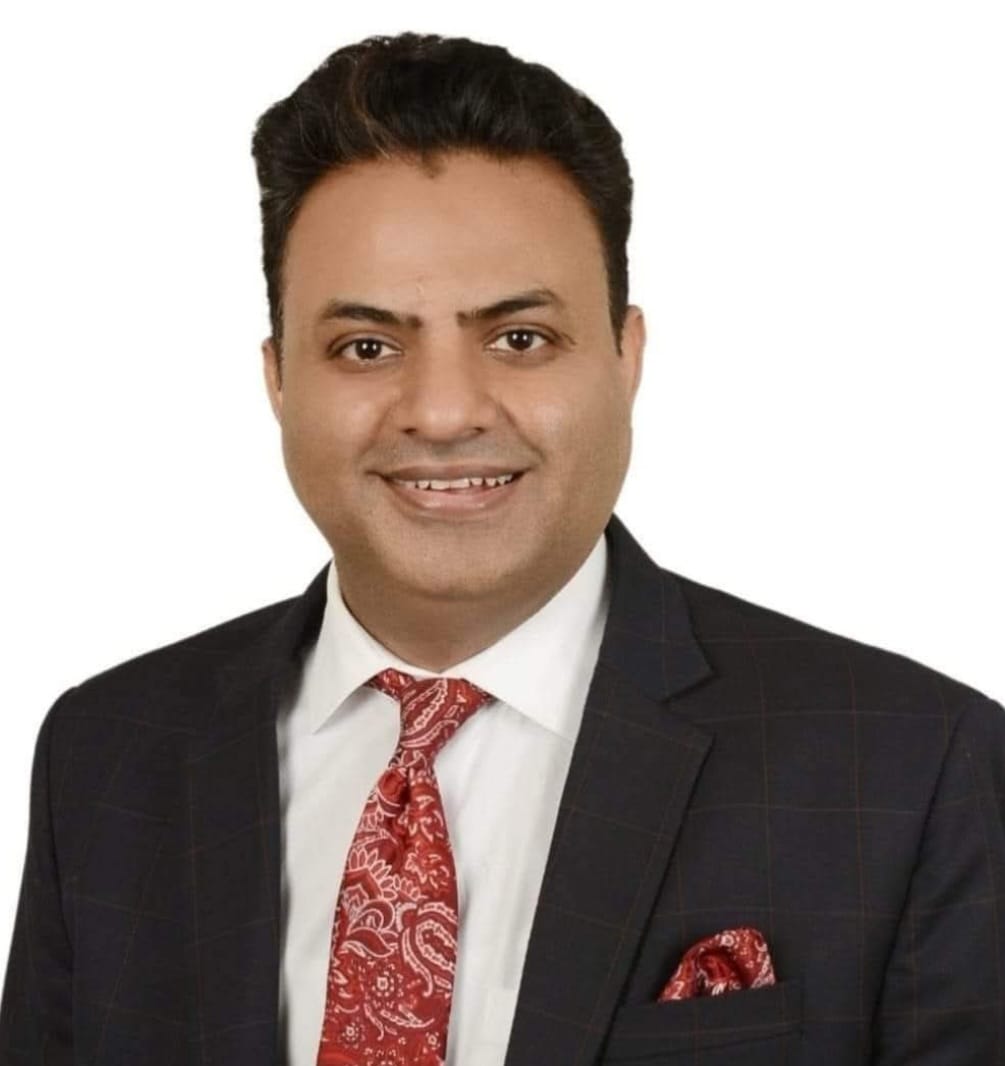
Shaz Nawaz Khan
In this beautiful narrative poem, Shaz shares the history and striving of his father and grandfather — the trials and tribulations of migrating to the UK, and how he and his family moved forward. He tells us what it means to carry two homes in your heart.
❖
I was born in Delhi — in lanes where the air smelled of rain, dust, and chai.
My grandfather was everything at once — a farmer, a freedom fighter, even an animal catcher when life demanded it.
He worked with his hands and dreamed with his heart.
He used to say, “Poverty leaves by the third generation, but only if the first two don’t stop walking.”
My father walked.
He raised three children with little money but endless determination.
He couldn’t give us gold, but he gave us honesty, courage, and a good name — the kind of wealth that lasts longer than money.
I wasn’t good at English.
My tongue stumbled, but my mind didn’t stop learning.
Numbers became my language, and accountancy became the road I chose.
I wanted to make him proud — to walk a little further than he could.
Then came the ticket — London, 2006.
A marriage, a promise, and a pocket full of faith.
Heathrow was colder than I imagined.
Delhi’s winter used to feel like an old friend; London’s cold went straight to the bone.
Saira was two months old.
Shailla was lost in a new city that didn’t smile back.
And I — somewhere between pardon and sorry — forgot how to feel like myself.
At work they joked about my accent, corrected the way I said Surrey Quay, and laughed when I brought curry for lunch.
They said it smelled “too strong.”
So I started eating alone.
Once someone said, “Be careful, Shaz — this area isn’t safe at night, you might get mugged.”
I smiled and replied, “Don’t worry — I’m a man of colour too.”
They didn’t laugh, but I did — quietly.
Because sometimes, humour is the only way to keep your dignity.
The office was its own kind of battlefield — polite smiles, quiet politics, compliments that came with invisible hooks.
I worked harder, stayed longer, but still feared the tap on the shoulder that meant, “It’s not working out.”
Each night, I’d walk home wondering if I’d made the biggest mistake of my life.
But then I’d remember my grandfather’s words:
“When you’re drowning, don’t look for land — learn to float.”
So I floated through sickness, through loneliness, through jobs that ended before belonging began.
Then came ILR in 2011 — a small card, but it felt like freedom.
We could finally exhale.
Iqra was growing fast — our London girl with Delhi in her eyes.
I tried teaching her Hindi.
She’d giggle at matra (vowel marks) and shabd (words), mix English into every sentence, and say, “Dad, this is hard!”
That’s when I realised: home isn’t a language.
It’s the love you grow up in.
Then came Hamza in 2017 — our little British baby, born into the stability we once prayed for.
By then, we were citizens.
We didn’t count visa days anymore.
We could finally plan birthdays instead of paperwork.
We gave him freedom — the kind we’d only dreamed about.
Still, every step had a cost.
Buying our first house in East London nearly broke us.
Every pound saved felt like a mountain moved.
But we did it — brick by brick, one long night after another.
It wasn’t just a house. It was proof that we belonged.
Then came the blow I didn’t expect — identity theft.
My name questioned, my honesty dragged through mud.
I fought for months, exhausted, but I cleared my name.
And when I did, I realised something:
I hadn’t just won back my reputation.
I’d found my strength.
That was when I truly began to know myself — not just as an accountant, not just as an immigrant, but as a person who had survived.
I started writing — poems, songs, whatever helped me breathe.
At first, it was just for myself.
But soon, people listened.
They related.
Poetry became my voice when words in meetings failed me.
It gave me peace in a city that never slows down.
And through it, I met people who saw me — not as “the man with the accent,” but as someone who had something to say.
From a small, rented desk, I started my own firm — just me, a laptop, and faith.
One client, then another.
One invoice, then ten.
Today, I have multiple offices across London, a strong team, and a few homes built from hard work and hope.
Every bit of it came slowly — not as luck, but as a reward for not giving up.
Now, I try to give back — volunteering at the Centre, helping new migrants with visa applications and tax returns, showing them how to find their footing in this fast-moving world.
Because I remember what it felt like to have none.
Iqra reads my poems now.
Hamza hums my songs.
Shailla smiles and says, “You finally sound like peace.”
And I think maybe she’s right.
My grandfather’s prophecy came true — poverty left by the third generation.
But I’ve learned what he didn’t say.
It’s not money that ends it.
It’s meaning.
It’s memory.
It’s kindness, even when the world isn’t kind.
❖
Now when I drive by the Thames, the cold doesn’t sting anymore.
Delhi hums in my heartbeat.
London breathes in my lungs.
Three generations walk beside me —
the farmer, the worker, the dreamer.
And I whisper to them:
We didn’t leave home behind.
We carried it with us.