In this beautifully written and detailed short story Jetha Makieleka shares her family story and reflects on how she now supports refugees and in so doing solves the problems for others that shaped her childhood. A story of hope.
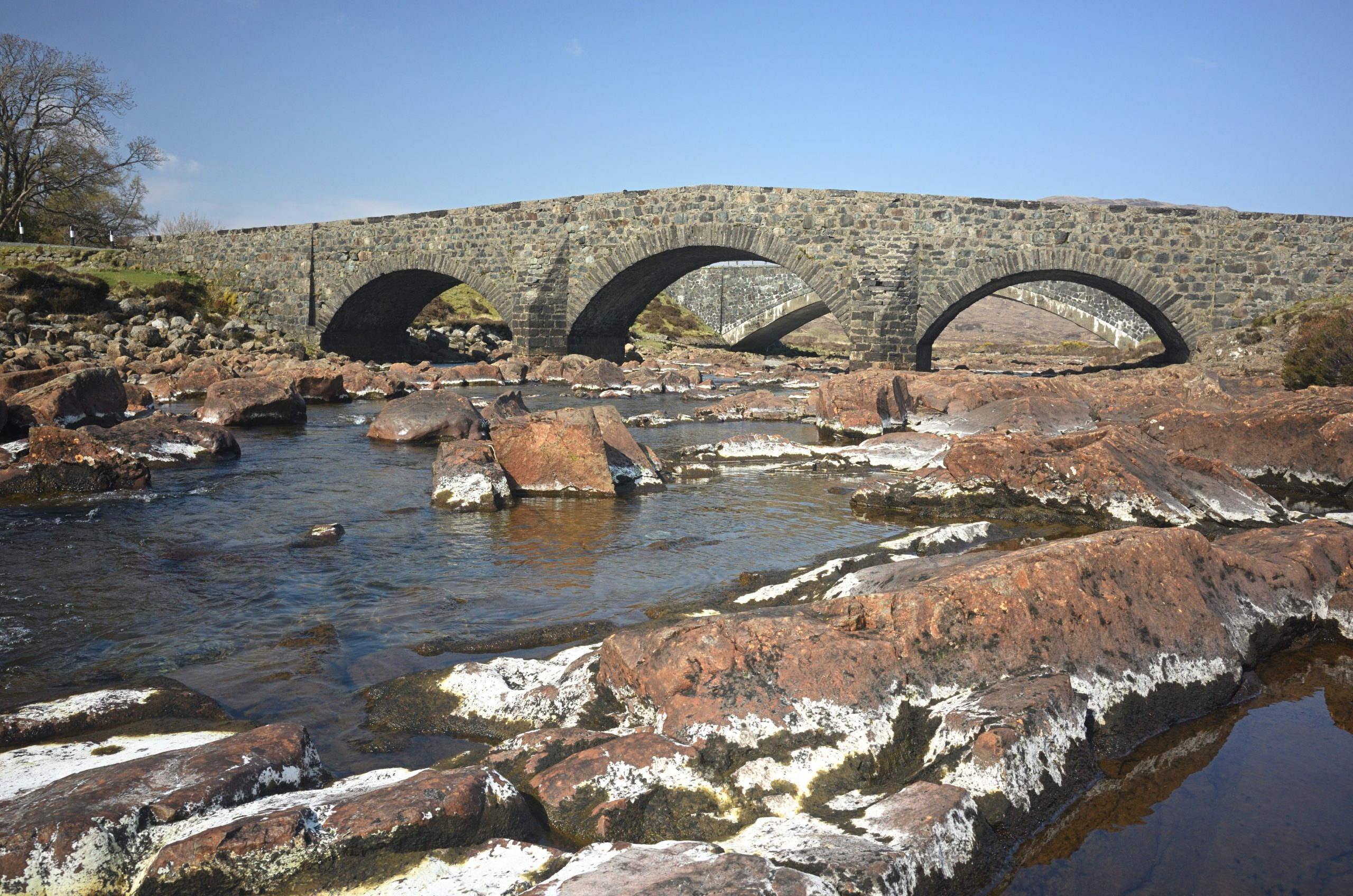
Crossing The Bridge
All she could hear was the sound of her heart beating, though she was surrounded by the sound of luggage wheels rolling on the airport floor and public announcements. She stood at the back of the queue. The officers wore navy blue uniforms and stood behind the desks, checking passports. She held onto both her children who stood beside her. One on the left and the other on the right, both their hands were locked into hers. “Stay calm,” she whispered to herself. Only three people were in front of her until she reached the front desk. Her eyes moved to scan the rest of the airport. Everyone was moving In different directions, yet they all shared a commonality: they were all headed to a destination. Everyone looked like they had somewhere to be. Apart from them, she felt her mind racing back to reality. ‘We stand out,’ she thought to herself, and wondered if the officers would pick up on it.
Only two people until she’s face-to-face with the officers in uniform. She made it to Europe, but the journey was far from over. She was still standing in the middle of the bridge, with her old life on one end and what would become her new life on the other side. Home was now a place she buried deep in her memory; her mind took her back to the last words her mother spoke to her, in 40-degree heat, as they sat outside under the blazing African sun. ‘Nothing is left of this place, go for your future.’
One person left. She locked eyes with one of the women in uniform. She had short brown hair, dark brown eyes, and rounded glasses that sat on her nose. ‘Excusez-moi, madame, pourriez-vous vous avancer s’il vous plaît ?’ She took a deep breath and walked over to the desk. She thought she felt her hands shaking, so she stopped to bend down and pretended to fix one of the children’s jumpers. ‘Stay calm,’ she repeated to herself. She handed over three passports and locked eyes with the lady.
There was a deafening silence. The lady flicked through the pages of the passport, and her eyes landed on the children. They stood there, the three of them, she scanned them head to toe. She pointed to the left side with no expression on her face. They followed the rest of the crowd, who were walking towards the plane. She felt relieved, and in that moment, she felt like she blended in, just like everybody else; they too had a destination, somewhere to go.
Building A New Foundation
Dusty blue carpets, vintage computers, uncomfortable chairs, and the sound of people murmuring. We stood in line while we waited to be seen by one of the ladies at the desk. The queue was long as usual. Everyone had that look on their face, like they had a problem. Not injuries or health, but an urgent issue they needed help solving. I hated going to the advice bureau when I was a child; it was no place for children. There was nothing colourful or vibrant, no activity or movement. Just people with problems and desks, computers, books, and advisers to help them. It was the place my mother went for help with reading her letters.
“My council Tax has gone up; can you please explain to me why?” my mother spoke with an accent and the English that she had never been taught but had learned in the few years she lived in the UK. Only when I was a 21 year old Law graduate, working at the Citizens Advice when I realised that whilst little me spent time, kicking my feet out the buggy and making faces to entertain myself in boring offices, my parents were forced to start over, in a new land where they spoke a different language and an entire new system they had to adapt to.
‘Look, Jetha, that’s the house we first moved into when we came to this country’. It was like pieces of the puzzle of their story were scattered, and they were collecting them by reminding us how it all fell into place.
A Disconnected Bridge
We shared the same home, but we felt miles apart. They never understood our world, my siblings and I. For them, our lives were simple. We had a roof over our heads, food on the table, and both parents were alive. What else could be wrong? They lived in a place where orphaned children wandered the dangerous streets at night, not living, but surviving until the next day. There was no such thing as a bad day at school when you had the luxury of attending one. My parents were doing something they had never done before: raising children in a land where they were foreigners. We grew up in a vibrant, multicultural city, where we loved a Chinese takeaway, and our local corner shop was owned by an Indian family. We blasted dancehall rhythms on the speakers whilst cleaning our rooms. Our taste buds were too adventurous, our music was too loud and disturbing. We didn’t have much in common, aside from our DNA and blood; we felt a greater sense of familiarity with friends at school. We laughed about what we watched on television the night before and danced to our favourite R&B songs. Separately, my parents had conversations about family members we only knew from stories, but they knew well enough to send money to them weekly. There were parts of our personality that our parents would never relate to. We all stood on one bridge, but a divide ran through the middle. We stood at one end, and my parents stood on the opposite side. There was a disconnection.
Building Bridges ‘Then’
‘Let’s race to shop’, my brother beats my sister and me. Breathless, we caught up to him and made it to the local corner shop. ‘Can we buy a phone card, please? Which one, the shopkeeper replied? African Tel. That will be £5,’ we handed over the note. “I’ll race you back home,” my brother said. All three of us ran out of the corner shop to make it back home first.
It became part of our weekly routine; we were sent to the shop where we bought phone cards for my parents. They were disconnected from their past. The phonecard took them back to a place they once called home, where they could unlock memories of people and places they left a long time ago. ‘Here, take the phone and speak to your aunty’.
They would push the phone to our ears, whilst we struggled to make conversation with family members whom we’d never met. I realized they weren’t just my parents, they were also the ones who had made it out of a land of hardship, and the village that had raised them was left behind. The phonecard was the bridge they built to stay connected to their homeland.
‘Your grandmother was a widow with three children, four empty stomachs, our home was a small shack where we all slept on the floor. My father passed away, and I had no uncle to pay for my school fees. I woke up early in the mornings and watched the other children get ready and prepare to make their way to school, while I couldn’t afford to.’
We listened attentively, as if it were the first time my dad had told us this story. He was driving us home from picking us up from school.
He wore slippers, quarter-length shorts, and a T-shirt. “You guys were born in a country where education is free. There is no reason for failure.”
In Dad’s words, ‘after church came school,’ the second most important thing in your life. Teachers were never wrong; you were misbehaving, and if you weren’t achieving to the highest level, it was because you weren’t working hard enough. My dad showed up at every parents’ evening. He would listen carefully, but I would watch him and wonder if much was being understood; not being fluent in English meant there was a lot of nodding and not much talking on his end. School was important, but just as it was where he grew up, it was the child’s responsibility to ensure they were doing it. My mum cleaned and ironed our uniforms and woke us up early. Dropped us off and picked us up from school, made sure there was something to eat when we got back, and put us to sleep. They couldn’t help us with our homework or read us a book before bed, because the next morning, mum would have to take a trip to the advice bureau to get help with her council tax, send money through Western Union to help pay for her sister’s school fees back home, and simply because they believed they gave us everything we needed. The life they did not have. They gave us what they could with the experience that they had.
Building Bridges ‘Now’
The space is colourful, the chairs are different colours: red, orange, and green. The floorboards are laminated with patterns of grey and blue boxes. The room is a long, rectangular shape, with a comfy sitting area with red and blue couches. The beaming lights on the ceiling illuminate the room. There are seven desks, each with two chairs: one for the child and the other for the volunteer who supports them.
Just outside the room is a comfortable waiting area for parents. I arrive at 16:00, set up the chairs and tables. I arrange some fruit in a bowl and fill up the water jug. Seven passionate and committed volunteers arrive at 16:30, ready to teach, encourage, and build the confidence of seven children who will walk through the doors at 5:00 PM. At 28 years old, I am a mentoring programme coordinator for a small charity that helps refugee families overcome the barriers they face in education. I coordinate a program for children aged 4–7 years old. I witness how they first walk into the room, shy and clinging to their parents, and then I see how their personalities grow as they become familiar with the space. Every child has a designated mentor who guides them through reading and writing.
For many parents who attend the session, English is not their native language. Sometimes they walk in and explain that they were unable to understand their child’s homework, or they bring letters they received from the council and ask if I can help them find a translator. It’s in those moments that I catch glimpses of my childhood. I sense a familiar determination in the parents, who are set on giving their children a better life than their own, but lack the resources and time to provide that life. At the end of the session, I have a debrief with the volunteers.
“I noticed her reading has improved; she’s sounding out the letters and spelling the words correctly,” one of the volunteers gives feedback on the improvement of a child.
I sometimes think about my parents starting a new life in the UK. It takes me back in time, and I smile at the fact that my siblings and I would have thrived in a space that I have built for the children at work. It’s rewarding to know that, in some way, I am giving back to the little me and solving problems that were present in my childhood. I guess we are all subconsciously building bridges, creating new foundations that have links to our past but lead to a pathway to a brighter future.
Jetha Makieleka