By Sayantani Biswas
Sayantani reviews a 1956 book, ‘the Lonely Londoners’ a novel about the Windrush generation written in 1956 and she finds it in universal truths about migration and the Big Smoke. (London).
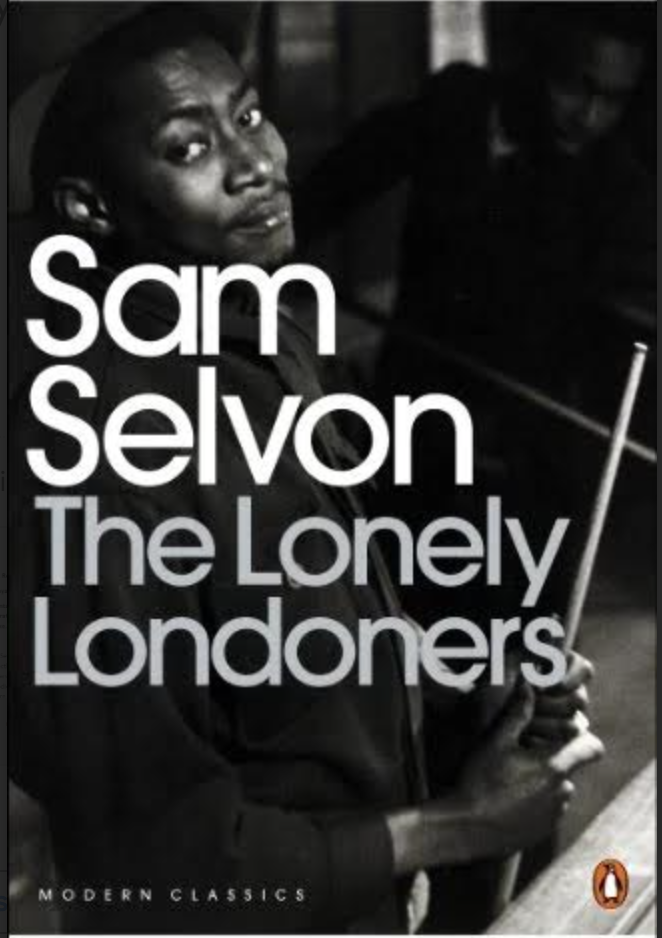
Sam Selvon’s “The Lonely Londoners” (1956) is a masterpiece of post-war literature that perfectly captures the “Windrush” generation’s experiences through a unique, conversational, and often humorous creolised English. Following the character Moses, this episodic novel explores themes of race, identity, and profound loneliness, painting a vibrant picture of 1950s London.
So, if I talk about this incredible book…..and if I had to describe “The Lonely Londoners” in one word, it would be real. Written by Sam Selvon, a migrant novelist who landed in London in 1950, this book isn’t a tidy story with a beginning, middle, and end. It’s more like sitting at a kitchen table, late at night, having a beer with someone while they tell you how they survived the coldest winter—of their life.
The story follows a man named Moses Aloetta, who is kind of the “old man” of the group, having arrived earlier than most. He’s the one who gets stuck, grudgingly, meeting the new arrivals from the Caribbean at Waterloo Station. And through him, we get to know a colourful, heartbroken, hilarious, and struggling cast of characters trying to make a life in the heart of the British Empire.
The Voice: Why It Just Feels “Right”
Okay, let’s talk about how it’s written. This is usually the part that makes people nervous, but don’t be! Selvon wrote this book in a mix of standard English and West Indian dialect (creolised English).
At first, you might find your brain stumbling over it, thinking, “Wait, what does that mean?” But trust me, after about ten or fifteen pages, you stop reading it and start hearing it. It has this incredible rhythm—it’s like jazz. It’s warm, intimate, and immediately breaks down the barrier between the reader and the characters.
The style of writing – yeah, that’s the way, Selvon’s way of telling us this story belongs to the people, not to the academics. He creates the city of London as a “Black city of words”.
This is simply ridiculous, until it isn’t. The tone is conversational and often quite humorous, even when it’s heartbreaking. You’ll laugh at the stories of “fellas” trying to chase women or trying to get rich quick. But then, almost in the same paragraph, the humour stops and begins with a line describing the city, survival within the city.
One of the biggest themes is just how lonely these Londoners actually are. They are lonely in the crowded tube, lonely in their dingy bedsits, and lonely in the city that is supposed to be the “mother country” but feels more like a cold stepmother.
The book talks about race, and it does so without lecturing you. It shows. It shows the conventional diplomacy of racial prejudice in housing and jobs. It shows how men, who were proud in their home countries, are made to feel small, invisible, or dangerous in London.
The “Fellas”
You have to fall in love with the characters:
Moses: The weary, sceptical, but ultimately kind-hearted mentor.
Bart: The one who tries desperately to “pass” as white, or at least to distance himself from other black people, which just leads to a sad life of playing a role.
Cap: A charming, lazy, and hilarious character who works hard not to work.
Tolroy: Who brings his whole family over, only for it to fall apart when the women in his family find more independence than he expected.
They are all trying to navigate this new world, and the bond they have—this “fellas” culture—is their only real protection against the cold.
The structure is unique. It’s described as a chronological narrative, but it feels episodic, almost like a series of anecdotes or memories. It moves around, jumping between different characters and different years.
The Night City
It’s also really important that so much of the book takes place at night. The city changes at night. It’s when these men, who are often invisible during the day, meet up at Moses’ room to talk, drink, and share stories. The city of London itself is a main character—grand, unwelcoming, yet fascinating.
Reading Sam Selvon’s “The Lonely Londoners” in 2026 as a modern international student felt, like chatting with a ghost who knows exactly what it’s like to pay £825 even for a single room in Zone 4.
Even though it was written back in 1956 about the Windrush generation, the emotional landscape of the book is still startlingly relevant to anyone trying to make London their home. It’s a book that’s both devastating and funny, filled with ballads (stories) that frequently capture the essence of being an outsider trying to find a footing in a, at times, cold, indifferent, and expensive city.
Under the Kiff-Kiff Laughter:
The book I ais series of vignettes, often hilarious, about a group of Caribbean men, spearheaded by the old veteran, Moses Aloetta, as they navigate London. Selvon uses this extraordinarily vibrant
dialect that makes you feel like you’re sitting with them in a smoky room, eating chicken curry, and forgetting the fog outside.
But the title is crucial: “The Lonely Londoners.” As an international student, I felt each bit of loneliness creeping up my spines harder. It’s the feeling of walking on Oxford Street, surrounded by millions, yet feeling absolutely alone and distant. Selvon writes about a great aimlessness underneath the laughs. I felt that when I first began my course, surrounded by people who had grown up in the UK, using slang I didn’t understand, and feeling like I was “leaving you standing in the same spot.”
Moses guides newcomers like Sir Galahad through the harsh reality of London—finding jobs, dealing with landlords who don’t want “us,” and fighting the biting cold. Galahad’s first experience with the “fogs” and the cold of London, how the sun seems odd like a ‘force-ripe orange’, really hits home. My first winter here, I thought I was properly dressed until I was waiting for the bus no. 482, and the wind rushed right through my bones. The boys in the book struggle to make ends meet. As a student, trying to find a part-time job while dealing with skyrocketing accommodation costs, I felt that same desperation to build a “new life” while everything felt designed to keep you broke.
One thing I absolutely loved and related to was the “old-talk” (long conversations) at Moses’ house on Sundays. That sense of community is everything. When you are far away from home, you create a “family” with your fellow migrants. Even now, my group chat is full of other international students. We swap tips on cheap groceries, complain about our landlords, and there are a few mates who joke about the British obsession with the weather. Like in the book, this “tight-knit migrant community” is the only thing that makes the city bearable.
“The Lonely Londoners” is a masterpiece because it doesn’t just show the struggle of a migrant, it showcases the life in the city. It’s all about the strength, the hopes to make a better future, and the way people come to love the heady excitements of London despite the prejudice against people of colour or the subtle type of bigotry they faced.
If you are an international student, a migrant, or just someone who has ever felt like an outsider, this book is absolutely for you. It’s a reminder that we are all, in some way, as “Lonely Londoners” just trying to find our place in the city of London.